
This week Tottenham and England footballer Kyle Walker has been reprimanded after being photographed inhaling nitrous oxide from a balloon whilst on a night out in Sheffield!
Kyle Walker is not alone in having used nitrous oxide this year. According to figures from the recently released ‘2012 to 2013 Crime Survey for England and Wales’, 6.1 % of 16 to 24 year olds had tried nitrous oxide in the past year and 2 % of all adults. This makes nitrous oxide only marginally less used than cannabis in the young population (6.4 %). The widespread use was illustrated when reports circulated last year that Prince Harry had been seen inhaling nitrous oxide from a balloon at a party in London.
Nitrous oxide (N2O) is a legal chemical in the UK, although it is illegal to sell it to someone who you think may abuse it. Most commonly known as laughing gas, nitrous oxide is used as a painkiller, particularly as ‘Entonox’ or ‘gas and air’, which is half oxygen and half nitrous oxide. This mixture is very commonly used in ambulances, dentistry and childbirth. The gas is used to numb pain and sedate the patient, although it is not a strong anaesthetic. Having broken and dislocated my ankle a few years ago I found the entonox to be of great relief whilst being transferred to hospital, more so than the morphine they also administered.
Nitrous oxide may also be abused to relax the user, produce feelings of euphoria (‘the giggles’ – hence laughing gas) and mild sedation up to a more dissociated state. This is where the body feels slightly separated from your mind. It is reported that some people have experienced hallucinations whilst using nitrous oxide.
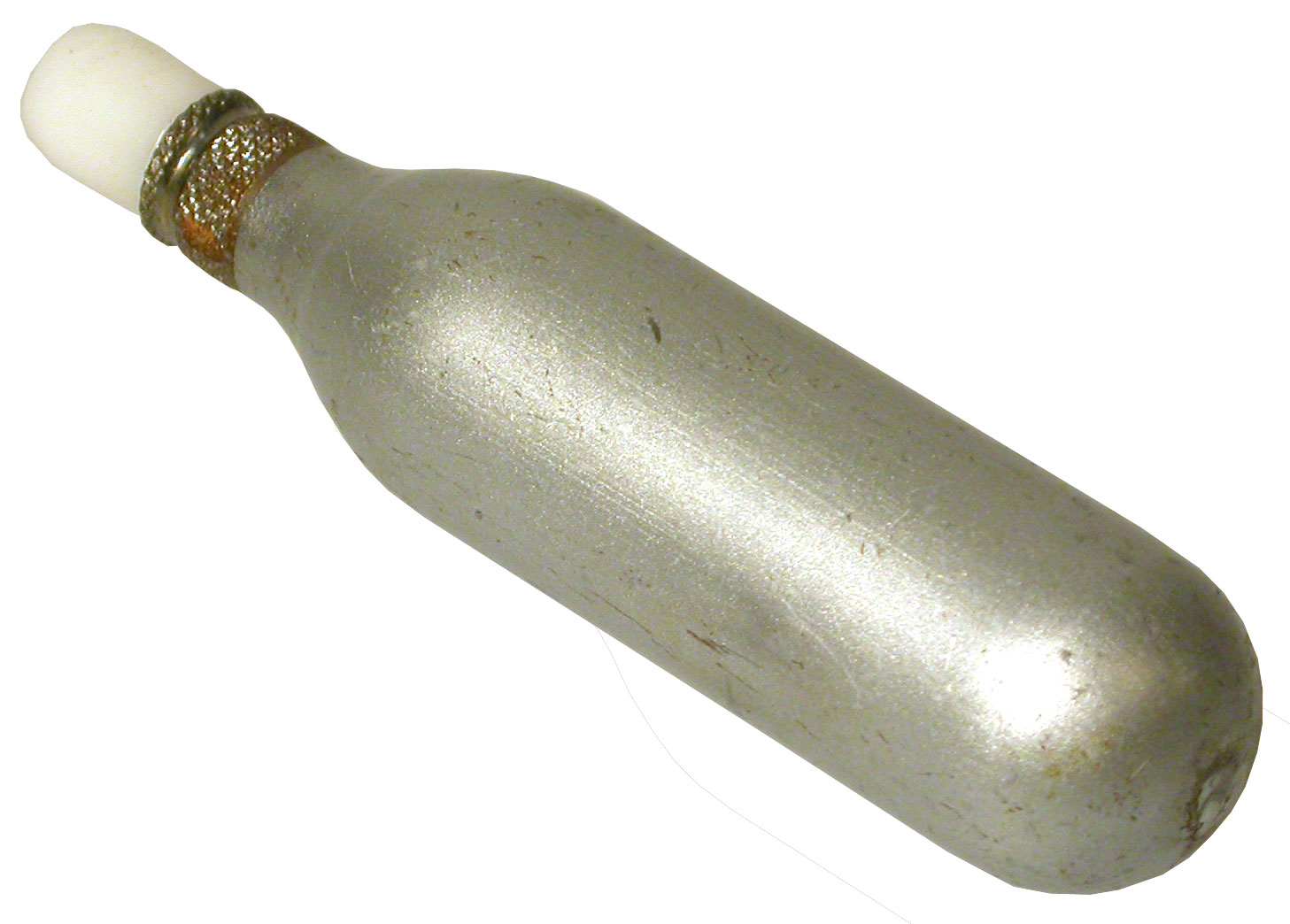
The most common method of using nitrous oxide is through inhaling the pure gas out of a balloon. Nitrous oxide may also be purchased in cylinders or cartridges such as the one shown above which is for a whipped cream dispenser. The commercial cylinders may be pure nitrous oxide rather than a mix with oxygen.
There are possible harmful effects from the use of nitrous oxide – mainly suffocation to due to lack of oxygen. In the normal atmosphere oxygen is at around 21 % volume. If pure nitrous oxide is inhaled then there will be no oxygen getting to the vital organs in the body. This is not sustainable for very long at all so could lead to death. It is very hard for a user to determine when they have had enough increasing the risk again.
Whilst it is legal I am sure it’s widespread use will continue, although I wouldn’t be surprised to see a crackdown on its sale.
It was announced last night that Kyle Walker would face no charges by the Football Association, who commented “Kyle has accepted this mistake. He will not face any action under the England player code of conduct.”
Thanks for reading – remember to follow us on Twitter and like us on Facebook !
I had this during childbirth – but it certainly didn’t make me laugh! Should have brought my own balloon along. 😉
I was disappointed not to be offered it in childbirth, apparently I didn’t need it. They did have to wrestle it off me in the hospital with my ankle!
Hi Tom,
Dentistry’s use of N2O is a direct result of the observation of its pain reducing effects at a laughing gas party ack in the 18th century. Nowdays in dentistry N2O is most commonly titrated (rather than used as fixed 50:50 conc entenox), as some people are adequately sedated at 20% and others need more than 50%. Sedation machines have a max of 70% nitrous oxide and safety cut-outs to prevent accidental overdose should oxygen somehow get cut off/run out. Patients are given 100% oxygen for 3mins after appointments to prevent theoretical dissociation hypoxia as nitrous oxide comes back out of the blood-stream back into the alveoli if it isn’t under constant pressure.
Although there are concerns to avoid high N2O concentrations, I think the issue for its abuse in football is more about any drug being abused, and footballers needing to be good role models rather than its actual risk of side-effects. It is pretty harmless as its MAC is 104 (I.e.it needs the alveoli to have 104% at 1 atmosphere to render half of patients unresponsive to a surgical stimulus). Its long-term use can cause vit B12 deficiency, but the chance of feeling anything other than slightly panicy/car-sicky until the NO2 is blown off and replaced with freshly inhaled oxygen is minimal. To cause brain starvation would probably require a concerted effort to push through that drive for fresh air.
Great information there, thanks Steve. The titration of the NO2 would mean that even when administered at 70 % max there would still be 30 % O2 available, which is more than ‘air’ contains. I also agree the ‘role model’ thing is why it has been reported, but the FA have taken the reasonable stance to tell him off publicly but nothing more.
Thanks again, if I have any questions around anaesthesia I now know where to come!
Nitrous oxide was one of, if not the first ‘anaesthetic’ in use and gained wide acceptance in the US but not in the UK at the time… In the UK ether was used instead and many physicians in Europe started experimenting with other inhalational agents – apparently in Edinburgh during the mid 1840’s Simpson (who is credited with the discovery of chloroform as an anaesthetic) used to invite people around for dinner parties and then encourage them to sniff directly from bottles of various chemicals in order to study the effects! When his party goers passed out with the use of chloroform he rapidly introduced it as an anaesthetic using it the next day! Unfortunately because chloroform is far more toxic than nitrous oxide it’s use in the UK led to a disproportionately high level of anaesthetic related deaths due to cardiac toxicity…. This was termed “sudden sniffers death” and quickly became a recognised method of suicide! Perhaps Simpson should also be credited as one of the first recreational users of inhalational drugs!
Hi Rhys, thanks for another great comment! Those parties of Simpson must have been very lively. Actually lively may not be the right word, deathly?? It would have been fun to observe them though. Cheers. Tom
We obviously know to much about inhalable recreational drugs. Kyle Walker was just born 150ish years too late as everyone respectable was at it then!
Remind me not to invite you and Rhys over for a dinner party on the same evening, things could get messy!
I remember a very interesting evening many lives ago when I worked as a vet anaesthetist – the machine was leaking. All animals and staff survived happily (very happily!).
That’s very funny, were you treating hyenas at the time?
Thanks, Tom
Well they weren’t before we started on them …
Steve W passed your link on to me. A very useful resource for a clinician and struggling academic wannabe. Chronic misuse of nitrous oxide, and its consequences, by dentists in the US has been documented (Layzer,R. Myeloneuropathy after prolonged use of nitrous oxide. Lancet 1978; 2: 1227) and also as a recreational drug way back in 1970 by the wonderfully named Dr Brilliant (Brilliant J. Nitrous Oxide as a psychedelic drug. New England Journal of Medicine 1970; 283: 1522.) There is a good body of evidence for its haematological side effects even after short exposures. A drop in circulated neutrophils can be demonstrated 24 hours after inhaling nitrous oxide for one hour. It is also very addictive…just ask poor Horace Wells who first demonstrated its use in Dentistry (a group of you may need to hold hands around a table to do this!).
Thanks very much for your kind comments Mick. I think I may change my name to Dr Brilliant. Thanks also for some more useful information and references too, I will look up the Brilliant paper. It seems there is a very well read readership here around anaesthetics!
regards
Tom